Bad Teacher
Play Bad Teacher
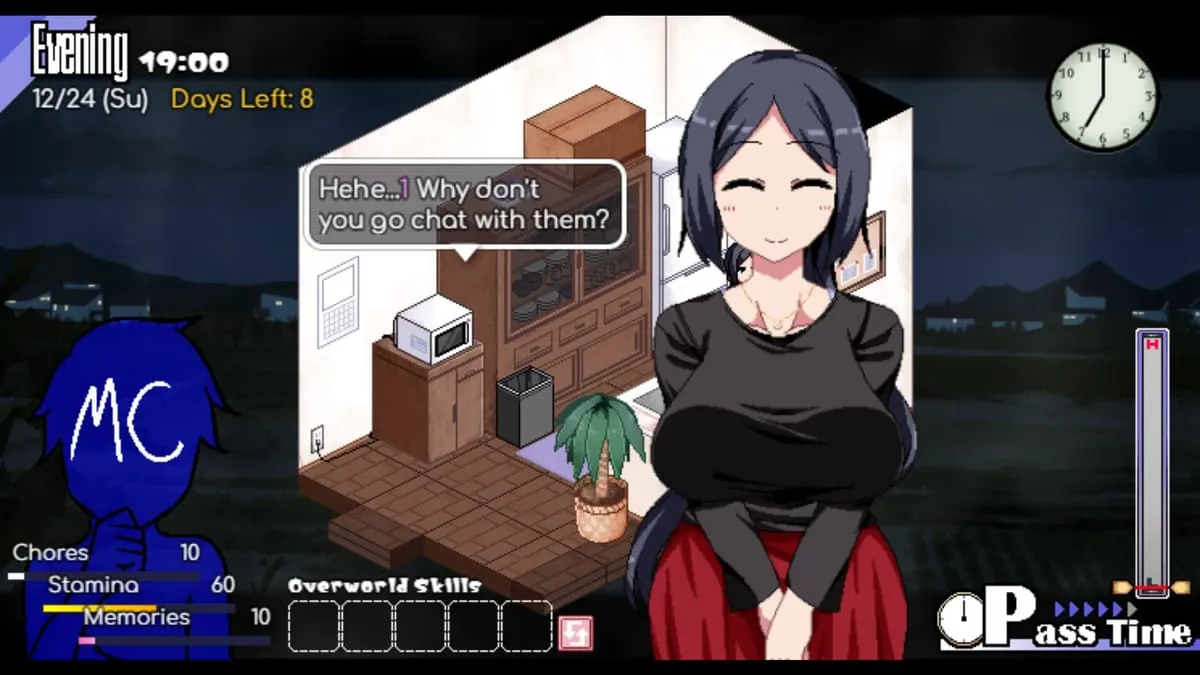
Bad Teacher Screenshots






Bad Teacher review
Master the choice-driven narrative and relationship systems in this adult simulation experience
Bad Teacher stands out as a narrative-driven adult simulation game developed by WindwardGames that combines storytelling with strategic decision-making. Rather than relying on reflexes or complex controls, this experience centers on meaningful choices that shape your journey through a school environment filled with dynamic characters. The game features an intricate system of dialogue trees, relationship meters, and resource management that makes each playthrough distinct. Whether you’re interested in understanding core mechanics, optimizing your strategy, or exploring different narrative paths, this guide provides everything you need to maximize your gameplay experience and unlock the game’s full potential.
Understanding Bad Teacher Core Mechanics and Systems
So, you’ve booted up Bad Teacher, ready to step into those… creatively polished shoes, and suddenly you’re hit with a wheel of dialogue options, multiple bars ticking up and down, and a limited pool of energy. It’s a lot! 😅 I remember my first playthrough, I thought I could just charm my way through everything. Big mistake. I was suspended by the end of the first in-game week because I treated the resource management strategy like an afterthought.
That’s why understanding the Bad Teacher game mechanics isn’t just helpful—it’s essential. This isn’t a game where you passively watch a story unfold; you are the architect of your own chaotic destiny through every choice. The core systems are a brilliant, interlocking machine. Let’s break them down so you can build your legacy strategically, not accidentally get fired for a snarky comment in the staff room. 🤓
How Dialogue Trees Shape Your Story Progression
At the heart of the Bad Teacher game mechanics is the dialogue choice system. Forget simple good/evil binaries. This is about nuance, subtext, and sometimes, outright manipulation. During any conversation—whether with a struggling student, a suspicious colleague, or the stern principal—you’re presented with a radial menu of responses. Each option is tinted with an icon or subtle wording that hints at its deeper impact: is it empathetic, authoritarian, flirtatious, or sarcastic?
The magic (and the danger) is that there’s rarely a single “correct” choice. Instead, each selection feeds into a complex web of cause and effect. A seemingly supportive comment to a student might boost their trust while secretly advancing your own hidden agenda for a later favor. Conversely, publicly siding with a teacher might grant you short-term Influence but permanently burn bridges with a student clique that controls access to a whole story arc.
Pro Tip: Don’t just read the dialogue option; read between the lines. Who is listening? What do they value? What is your character’s goal in this exact moment?
Let’s talk about a classic early-game scenario that perfectly illustrates this branching design. You witness the school bully, Jason, shaking down a quieter student for lunch money in the hallway.
- Choice A (Intervene Directly): You confront Jason. This could play out several ways. If you have high enough Influence stat mechanics, you can assert your authority and defuse the situation. This earns the quiet student’s deep trust, unlocking a personal side-quest later where they provide you with crucial intel on faculty gossip. However, Jason’s relationship plummets, potentially locking you out of his network of “extracurricular” activities.
- Choice B (Report It): You go straight to the principal. This aligns you with formal authority, boosting your professional reputation slightly. But both students see you as a snitch. You miss the immediate side-quest and may find student interactions more difficult down the line.
- Choice C (Ignore & Observe): You turn a blind eye. Jason notes your “coolness,” slowly opening a path to interact with his aggressive clique. This can lead to unique missions involving after-hours school access or black market items. The victimized student, however, becomes despondent, and their storyline may close off entirely.
This one moment isn’t just flavor text; it’s a pivotal branch in your narrative tree. The dialogue choice system is how you navigate these forks, and there’s no autosave scumming that can undo all the ripple effects! 😲
Mastering Relationship Meters and Character Interactions
If dialogue is the script, then the relationship meters gameplay is the director’s notes on how every actor feels about you. This isn’t a single “like/dislike” bar. Bad Teacher features a sophisticated character interaction system where every major NPC has multiple relationship metrics tracked in the background.
Think of it like this: you can have a high “Trust” score with a student because you help them academically, but a low “Fear” score because you’re never strict. This unique combo will make them confide in you but might also mean they try to walk all over you during class. Another teacher might have high “Professional Respect” for you but low “Personal Affinity,” meaning they’ll back you in a meeting but never invite you for drinks where the real deals are made.
Here’s what high scores in specific areas can unlock:
- Student Trust/Fear: Unlocks personal side-quests, grants you “assistants” who can complete small tasks for you (like gathering rumors), or gives you control over classroom dynamics.
- Staff Alliance/Rivalry: Provides cover for you during inspections, grants access to restricted areas like the faculty lounge or records room, or starts gossip chains that damage another character’s reputation.
- Romantic Tension: Opens up intimate storylines that can provide unique emotional support buffers or become scandalous liabilities if discovered.
The character interaction system is also deeply tied to the game’s morality meter—a hidden alignment that shifts not based on “good vs. evil,” but on “Authority vs. Anarchy” or “Self-Interest vs. Community.” This meter doesn’t have a giant on-screen gauge; instead, it subtly changes how NPCs greet you, the rumors that circulate, and which of the three major reputation tiers (Respected, Feared, or Notorious) you begin to occupy. Your rep tier is the ultimate gatekeeper, locking or unlocking entire main story arcs in the game’s three-phase structure.
To visualize how these core systems work together, let’s look at this breakdown:
| Core Mechanic | Primary Function | Direct Story Impact |
|---|---|---|
| Dialogue Choices | Drives immediate conversation outcomes and NPC reactions. | Creates narrative branches, unlocks/hides quests, and sets relationship modifiers. |
| Relationship System | Tracks multi-faceted standing (Trust, Fear, etc.) with each character. | Gates character-specific storylines, side-quests, and access to resources or areas. |
| Action Points (Energy) | Limits the number of activities you can perform in a single day. | Forces strategic prioritization; choosing between advancing a relationship, earning money, or upgrading skills. |
| Influence Stat | Determines success rate in persuasive, intimidating, or authoritative actions. | Enables key dialogue and event checks, allowing you to bypass obstacles or assert control. |
Resource Management: Energy, Influence, and Action Points
This is where the Bad Teacher game mechanics shift from pure narrative to a tight, strategic simulation. Your days are limited, your energy is finite, and your social capital is a currency. Mastering this trio is the difference between a thriving gameplay loop and a frustrating grind. 🧠
The Action Points Energy System: Your Daily Currency
Every morning, you start with a pool of Action Points (AP), which is essentially your energy for the day. Everything costs AP:
* Teaching a class (well or poorly).
* Holding a private conversation with a student or staff member.
* Searching an area for items or clues.
* Working a part-time job after school for extra cash.
* Engaging in a personal hobby to relieve stress.
The action points energy system forces you to make meaningful choices every single day. Do you spend your last few points grading papers to avoid principal scrutiny, or do you sneak into the gym storage to look for evidence for a blackmail side-quest? You cannot do it all, so you must plan your strategy around your current goals.
Influence Stat Mechanics: Your Social Power Battery
Influence is your key social stat, functioning like a combination of persuasion, reputation, and sheer force of personality. It’s not spent like AP, but rather acts as a threshold you must meet to unlock certain options in the dialogue choice system and key events.
- High Influence (>70): You can sway faculty votes, shut down student rebellions with a glare, and convince others to cover for your misdeeds. Certain story paths, especially those involving authority and control, require high Influence.
- Low Influence (<30): You’re largely ignored. Your suggestions in meetings are dismissed, students talk over you, and you’ll find many persuasive dialogue options greyed out.
You build Influence through successful public actions, completing major story objectives, and by managing your relationship meters gameplay effectively. It can also be drained by major failures or scandals. Think of it as your most important long-term “skill.”
The Strategic Trifecta: Balancing Your Upgrades
The game features a three-phase progression system that works like a specialized RPG skill tree. You earn points to invest in three core areas:
1. Classroom Management: Unlocks abilities to control student behavior, teach more effectively (freeing up AP), and spot hidden student dynamics.
2. Personal Allure: Enhances your charisma, unlocking new dialogue paths and boosting the rate at which you build certain relationships.
3. Cunning & Guile: Grants access to stealthier actions, better blackmail opportunities, and the ability to hide your true motives.
The single most important piece of resource management strategy in Bad Teacher is this: do not specialize in only one tree. The game is designed to punish min-maxing. 🚫
Why? Because a teacher with maxed-out Cunning but no Classroom Management will constantly lose control of their class, burning AP on damage control. A teacher with only Personal Allure might be well-liked but will be powerless in a direct conflict with another faculty member. Success depends on a careful, reactive balance. Need to placate the principal? Boost your Classroom skills. Planning a risky scheme? You’ll need points in Cunning. Want to romance a specific character? Time to invest in Allure.
Your resource management strategy must be fluid. Check your upcoming goals, assess which stats are being checked most often in your current story arc, and invest accordingly. This constant balancing act—juggling your daily AP, maintaining your Influence, and strategically spreading your progression points—is what makes the Bad Teacher game mechanics so deeply engaging and replayable. You’re not just choosing dialogue; you’re architecting a persona, resource by resource, choice by choice, on your path to becoming a legend of the hallways.
Bad Teacher delivers a sophisticated gameplay experience that rewards strategic thinking and meaningful decision-making. By mastering the dialogue system, understanding relationship mechanics, and carefully managing your resources, you can unlock multiple narrative paths and character interactions. The game’s strength lies in how your choices genuinely impact the story—from early decisions about bullying to long-term reputation management that affects NPC behavior throughout your playthrough. Success requires balancing competing upgrade paths, maintaining awareness of your morality meter, and recognizing how hidden agendas create branching opportunities. Whether you’re pursuing specific character relationships, building influence with particular groups, or exploring the game’s darker narrative options, understanding these core systems transforms Bad Teacher from a simple choice-based game into a complex simulation where every decision carries weight. Take time to experiment with different approaches, track how your choices ripple through the narrative, and enjoy discovering the multiple endings this choice-driven experience offers.